
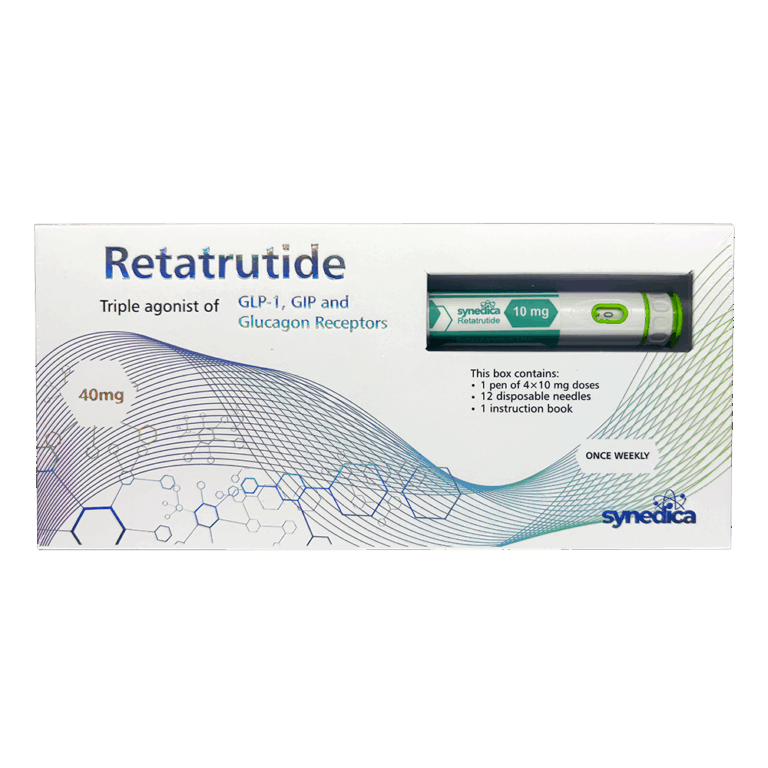

Retatrutide for Sale: Research Grade Triple-Agonist Peptide
Finding high-purity Retatrutide for sale with verified analytical documentation is critical for modern biochemical and preclinical trial modeling. As an advanced GGG (GLP-1 / GIP / Glucagon) tri-agonist reagent, Retatrutide represents a significant technological leap over single- and dual-agonist compounds. Our laboratory supply platform provides academic, industrial, and clinical institutions with pure, lyophilized Retatrutide engineered for consistent experimental reproducibility.
Why Source Retatrutide for Sale from Our Analytical Catalog?
When sourcing Retatrutide for sale online, material purity and batch-to-batch consistency directly impact your experimental outcomes. Impurities or degraded peptide chains create baseline noise, skewing binding affinity data and receptor kinetics.
-
Verified Analytical Purity: Every batch of Retatrutide undergoes rigorous testing via High-Performance Liquid Chromatography (HPLC) and Mass Spectrometry (MS) to guarantee purities exceeding 98%.
-
Low Endotoxin Standards: Processed using advanced Solid-Phase Peptide Synthesis (SPPS) and strict filtration to minimize non-specific cell activation in culture assays.
-
Rapid Cold-Chain Handling: Lyophilized under strict nitrogen flushing to protect structural integrity during handling and delivery.
Research Use Only Notice: Retatrutide is an investigational triple-hormone receptor agonist currently under clinical evaluation. All material listed as Retatrutide for sale on this portal is supplied exclusively for laboratory research, in vitro assays, and pre-clinical animal modeling.
Biochemical Profile & Receptor Binding Characteristics
Retatrutide (LY3437943) is a 39-amino-acid modified peptide engineered to simultaneously activate three key metabolic receptors:
-
GLP-1 (Glucagon-Like Peptide-1) Receptor: Modulates intracellular cAMP production and glucose-dependent signaling.
-
GIP (Glucose-Dependent Insulinotropic Polypeptide) Receptor: Works synergistically with GLP-1 pathways to alter energy balance and cellular responses.
-
Glucagon (GCG) Receptor: Triggers targeted pathways associated with cellular lipid oxidation and energy expenditure.
                     ┌─── GLP-1 Receptor ──► cAMP Cascade / Glucose Signaling
                     │
Retatrutide (Triple) ┼─── GIP Receptor ────► Synergistic Metabolic Modulation
                     │
                     └─── Glucagon Rec. ───► Lipid Oxidation & Energy Pathways
By sourcing Retatrutide for sale for multi-receptor assays, investigators can evaluate complex downstream cellular behaviors that isolated single-receptor agonists (like Semaglutide) or dual agonists (like Tirzepatide) cannot replicate.
The primary scientific value of Retatrutide stems from its triple agonist binding profile across glucagon-like peptide-1 (GLP-1), glucose-dependent insulinotropic polypeptide (GIP), and glucagon (GCG) receptors. Unlike single or dual peptide analogs, this 39-amino-acid modified peptide interacts concurrently with all three target receptor complexes.
When introduced into cell cultures or tissue models, the compound triggers intracellular cyclic AMP (cAMP) generation and activates downstream kinase cascades. Research published through the National Center for Biotechnology Information details how coordinated activation of GLP-1 and GIP receptors modulates glucose-dependent intracellular signaling, while simultaneous glucagon receptor engagement alters cellular lipid oxidation pathways.
Primary In Vitro and Preclinical Research Applications
Researchers choose our verified Retatrutide for sale across multiple experimental domains:
-
Receptor Cross-Talk & Kinase Profiling: Mapping simultaneous tri-receptor activation dynamics across human and rodent tissue models.
-
Hepatocyte Lipid Clearance Studies: Evaluating gene expression shifts linked to fatty acid beta-oxidation and lipid droplet clearance.
-
Adipocyte Lipolysis Modeling: Tracking enzyme activation and glycerol release in cultured primary adipocytes following triple-receptor binding.
-
Pharmacokinetic & Albumin Binding Analysis: Examining how the integrated fatty diacid side chain alters plasma protein retention in pre-clinical rodent models.
Reconstitution Guidelines & Laboratory Storage
To maximize the shelf life and bioactivity of your Retatrutide for sale, follow standardized laboratory protocols:
-
Reconstitution: Reconstitute the freeze-dried powder using Sterile Bacteriostatic Water or standard laboratory buffer. Gently swirl the vial until dissolved—avoid vigorous vortexing to prevent peptide chain shearing.
-
Storage Conditions: Store unopened lyophilized vials in a dry environment at or below -20°C. Upon reconstitution, store short-term aliquots at 2°C–8°C or freeze at -80°C for long-term stability, avoiding repeated freeze-thaw cycles.
Product Specifications & Ordering Details
| Specification | Details |
| Product Name | Retatrutide (LY3437943) |
| CAS Number | 2381089-83-2 |
| Sequence Length | 39 Amino Acids |
| Purity (HPLC) | $\ge$ 98.0% |
| Physical State | White Lyophilized Powder |
| Regulatory Class | Research Use Only (RUO) |
Explore our complete catalog on the Pro Filler Supply Store to order Retatrutide for sale in standard microgram/milligram vials or custom bulk quantities. For compliance documentation, CoA verification, or specialized handling specs, contact our team via the Contact Us Page or review our regulatory guidelines on the Pro Filler Supply Homepage.
Frequently Asked Questions (FAQ)
Is this Retatrutide for sale suitable for human consumption?
No. Retatrutide is an investigational compound supplied strictly as an analytical reagent for research and laboratory use only.
How is the purity of Retatrutide verified?
Every production batch undergoes HPLC (High-Performance Liquid Chromatography) and Mass Spectrometry to confirm identity, purity ($\ge$ 98%), and molecular weight.
What solvents are recommended for reconstituting Retatrutide?
Standard laboratory solvents include Bacteriostatic Water, Sterile Saline, or DMSO depending on your specific cell culture or binding assay protocol.


Reviews
There are no reviews yet.